Distilled History

A Drinking Blog with a History Problem

Archive for the ‘Architecture’ Category

April 18th, 2013 by Cameron

The Southside Brewing Heritage Tour

Andrew Veety

In about two weeks, Distilled History is going to celebrate its first anniversary. Looking back over the past year, I am amazed at how this project has enriched my life. I’ve won an award, I’ve scored free meals, and people tell me all the time that I’m good at what I’m trying to do. I’ve had bike crashes, I’ve been chased, and I’ve even been tickled. I’ve met great teachers, librarians, historians, bicyclists, and mixologists who have helped me find the answers I needed. Perhaps most importantly, I’ve become much more aware of the city I know call home. Wrap it all up and it’s been a fun and amazing year.

It all started when a guy named Andrew Veety told me that I should be writing a blog. A freelance writer himself, Andrew has made a name for himself in St. Louis as a person who can tell you where you can find good food in this town. His articles are often published in local magazines such as St. Louis and Feast. With several other “foodies”, he’s also involved in a podcast named StewedSTL that will tell listeners (in a very colorful way) where to find the best (and worst) places in St. Louis to get food and drink. Three years ago, he thought up a project named “The Church of Burger“. For twelve months, he toured St. Louis eateries to find out where the best burger was being served. Like my history posts, it wasn’t done for any sort of reward or pay. He simply wanted to know where it was and let other people know what he found.

Andrew is a great writer. He’s witty, intelligent, and an insufferable smart-ass. I thought I could curse with the best of them until I met this guy. Still, maybe he saw a diamond in the rough when he first tried to convince me to put my opinions to page. At the very least, I’m sure he was growing sick and tired of me complaining about the lack of places in St. Louis that do a Manhattan cocktail right.

1706 Washington Avenue

As I approach the one-year mark of Distilled History, this post will be a bit different. For this one, I don’t have a history topic and tasty drink to write about. Instead, I’m making a fun announcement (keep reading) and offer my thanks to that goofball Veety. I ask my readers to go check out his work, because it’s very good.

The last post, the Bygone Ballparks of St. Louis, was my most ambitious one yet. With all the research, biking, and artwork that went into it, I needed a nap after it was done. And two days after it was published, the company I worked at for the last sixteen years suddenly closed. I’ve tried to keep topics coming out on a regular basis since starting this blog, but Distilled History had to go on hiatus while I looked for a new job.

After working (and biking) to the same job for sixteen years, my daily routine was flipped upside-down. Instead of biking the back streets of St. Louis city, I found myself wearing suits and driving far into the forests (or as most people call it “the County”). Worst of all, I had to cut back on the good gin. As anyone who has been out of work can tell you, unemployment doesn’t pay the liquor bills. However, I did find some time to get out on the bike and create an appropriate new bike-a-sketch.

Bike-a-sketch: Hire Me

Fortunately, things turned around quickly. In an interview, I was actually recognized and asked “Are you the guy that writes the St. Louis history blog?”. After a twenty-minute discussion about it, I was rewarded with a job offer the next day. With that in my back pocket, I started talking up Distilled History in other interviews. Remarkably, two more job offers soon followed. I’m sure it’s just a funny coincidence, but I’ll take it. Suddenly, I had my choice of places to work. I accepted a great position back in downtown St. Louis and things are now getting back to normal. I’ve also started research for the next Distilled History topic and lining up an ambitious drink plan. It should be ready for publication by early next week. So along with blowing up Mr. Veety’s ego, I’ll use this brief post to make an announcement that I’m really excited about.

(Upate: As of May 1, 2013, the tour has been sold-out. However, we’ll have another one scheduled in the near future. I’ll post on this blog when we have a date.)

The Southside Brewing Heritage Tour

Here’s the skinny: Due to popular demand, Landmarks Association of St. Louis has decided to reprise their popular South Side Brewing Heritage tour. They last offered it in 2010, but this time they’ve asked Distilled History (me) to help them out. The tour will travel past a wide array of brewing-related sites in St. Louis including remaining brewery buildings, the sites of former breweries, the homes of beer barons and former “tied houses” (brewery-owned/operated taverns). We’ll even offer snacks and tasty beer from a local microbrewery on the bus. The tour will make stops at several brewery-related buildings including the Malt House of Schnaider’s Brewery (now Vin de Set) and the stock house and cellars of the former Cherokee Brewery. Andrew Weil from Landmarks Association and yours truly from Distilled History will provide riveting and enlightening commentary along the way.

Landmarks Association of St. Louis

Tickets are $45.00 for members of Landmarks Association and $55.00 for non-members. Call Landmarks Association at (314) 421-6474 or email Andrew Weil (aweil@landmarks-stl.org) at Landmarks to purchase tickets. Seats are limited and additional bar tabs at tour stops are not included. Participants must be 21 or older.

Since 1959, Landmarks Association of St. Louis has been a dedicated advocate for the architectural heritage of St. Louis City and the surrounding region. The organization is an independent non-profit that works to protect St. Louis’ unique architectural heritage and to educate the public about the economic and social values of unique historic buildings and neighborhoods. Through the years, the organization has played pivotal roles in the protection of iconic St. Louis buildings such as the Chatillon-DeMenil House, the Bissell Mansion, the Wainwright Building, and the Old Post Office. It has also helped to protect thousands of neighborhood buildings throughout the city and create incentives for their redevelopment through the creation of National Register Historic Districts. Landmarks Association of St. Louis is dedicated to the preservation and promotion of our amazing historic buildings and works hard to create opportunities for people to explore and learn about the places where we live.

When I decided to write this blog, I made a decision to avoid making controversial statements. Not a fan of debate (especially on the Internet), my goal has been to relay interesting information about topics that interest me. I know I ruffled a few Cardinal feathers in the baseball post (some of you people need to lighten up), but other than that, my intent is to simply inform and amuse. But here’s an opininion I will never back down from: St. Louis is better because of Landmarks Association. I would not be able to write this blog at the level I can if that organization did not exist.

Landsmarks Association

With that said, lets review a few more opinions that I will cage fight you over:

The Del Taco Flying Saucer

  • Stop shaking the Manhattan cocktail. It should be stirred. Although I am grudgingly accepting that many people insist on drinking it on the rocks, I’ll never buy into the shake
  • You need to see the Campbell House Museum. It’s one of the most amazing places in St. Louis. Go there and take a tour. Seriously, the things you’ll see and the story you’ll hear in that house are worth well more than the seven dollars you’ll pay to get in
  • A martini is made with gin. If you want vodka instead of gin in your martini (something that confuses me) you should say “I’d like a vodka martini”. If you ask for it shaken, then you are an extraterrestrial
  • Get on a bike and ride around St. Louis. Even better, get involved with Trailnet and take any one of their fantastic bike tours. It’s a great way to see our city

In closing, please join Landmarks and myself for a beer tour on Sunday, May 19. It will be fun to meet Distilled History fans as we travel through the brewing history of St. Louis. We’ll drink good beer and hear some good stories.

(Update: Again, as of May 1, 2013, the tour has been sold-out. However, we’ll have another one scheduled in the near future. I’ll post on this blog when we have a date.)

Most importantly, proceeds will help Landmarks continue their efforts in historic preservation and educate St. Louisans about the history of our great city.


October 24th, 2012 by Cameron

Schnaider’s Beer Garden

Schnaider's AdvertOne of my first action items when moving to St. Louis in 1995 was to take a tour of the Anhueser-Busch Brewery. Fresh out of college, I thought the place that made Budweiser must be the only significant brewery in the history of the city. I marveled at the bottling machines, admired the Clydesdales, and tried to scam more than the allotted two glasses of free beer in the tasting room. Back then, I had no idea that there was much more to learn about the story of beer in St. Louis.

As I've matured (well, maybe I should say “aged”), I'm pleased to report my appreciation for the history (and drinking) of beer in St. Louis now goes far beyond Bud and Bud Light.

The history of beer in St. Louis is an enormous topic. It's too big for a single blog post, but to make this one work, a bit of historical backfill is necessary. In second half of the 19th century, the population of St. Louis exploded. Between the years 1850 and 1870, the number of people living in the city more than tripled. A significant part of that population growth was German. In 1829, a famous German writer dubbed Missouri “The Rhineland of the west”. As a result, thousands of German immigrants flooded St. Louis and the lower Missouri River valley. With the Germans came beer and the need to make more of it. St. Louis was a perfect fit for this industry. Along with a growing number of thirsty people, a large system of natural caves existed beneath the city. These caves provided the cooler temperatures needed to ferment large quantities of lager. As a result, St. Louis would find itself brimming with dozens of breweries in the latter half of the 19th century.

I recently learned about the unique story of one of those breweries. Even better, I found my first opportunity to research the history and drink aspects of a subject at the same location.

That brewery is Joseph Schnaider's Chouteau Avenue Brewery. Once located at the intersection of Chouteau Avenue and Twenty-First Street, it was one of the most successful St. Louis breweries in the in the 1870's. In 1876, Chouteau Avenue Brewery ranked among the top three local breweries in capital stock, annual value of business, number of barrels produced, number of employees on hand, and number of horse wagons used. Today, no trace of the brewery exists except for one building.

It's founder, Joseph Maximillian Schnaider, was born in Zell am Hammersbach, Germany in 1832. A brewer by trade, he settled in St. Louis in 1854. At first, he co-owned a successful brewery named the “The Green Tree Brewery”. In 1865, he sold his interest to his partner and set off on his own. Shortly after, he opened Chouteau Avenue Brewery just west of the city.

The story of Schnaider's brewery isn't much different from the other St. Louis breweries of the day. What makes it unique is the beer garden he built next to it. Covering several acres, Schnaider's Beer Garden served food and drink to thousands of people at once. At its height, it became a nationally known resort where visitors could enjoy music, watch theater, and of course, drink beer.

Entrance to Schnaider's Beer Garden

The northern half of the brewery complex can be viewed in the upper left corner of plate 40 in Compton & Dry's Pictorial St. Louis.

1875 Pictorial St. Louis - Plate 40

By lining up plates 39 and 40, the full extent of the beer garden can be seen. The main brewery is located in the upper-right edge of the complex (labelled “1″). The rest of the property contained an auditorium, pavilions, plenty of shade trees, gazebos, and other structures used to entertain the large crowds that would pack Schnaider's each day.

1875 St. Louis Pictorial - Plate 39 & 40 - Combined

Across the street from the brewery is a structure that no longer stands. It was demolished and Schnaider's Malt House was built there in 1876 (one year after the publication of Compton & Dry's Pictorial St. Louis).

1875 St. Louis Pictorial - Plate 40 - Closeup

Schnaider's Beer Garden became a nationally known venue. Bands, theater groups, and travelling shows performed nightly during the summer months. According to the book St. Louis Brews: 200 Years of Brewing in St. Louis, 1809-2009, Schnaider even created his own light opera company to compete with a local baseball team, the St. Louis Brown Stockings. The success of the Brown Stockings (later to be known as the Cardinals) was drawing patrons away from his beer garden and eroding his profits. It's also believed that some of the musical groups that played Schnaider's would eventually combine to form the St. Louis Symphony Orchestra. To promote Schnaider's, schedules, advertisements, and reviews for performances such as “The Pirates of Penzance” and “The Beggar Student”, were published daily in local newspapers.

Schnaider Bands

Behind all the entertainment, Schnaider's served beer… enormous quantities of beer. Thousands of people would fill Schnaider's Beer Garden each day to eat, drink beer, and celebrate. They'd make toasts, smoke cigars, and watch fireworks displays as music and theater swirled around them. With such revelry, it's not surprising things would sometimes get a little out of hand. One notable example was reported by the St. Louis Post-Dispatch in August, 1881. A young man “under the influence of liquor” visited Schnaider's Garden and promptly began throwing tables and chairs around. When waiters intervened and called the police, the man simply claimed “Oh, that's nothing! We do that kind of thing in Philadelphia and never think anything about it”.

The next morning, he found out things work a bit differently in St. Louis. A judge fined him ten dollars.

Schnaider Pavilions

Joseph Schnaider died in 1881 while visiting his homeland. His wife and oldest son took control of the brewery and continued to expand operations. Over the next ten years, several buildings were added to the complex, including an ice house, a machine house, a storage house, a bottling house, and a summer theater. By 1885, Schnaider's would be one of the largest breweries in St. Louis.

Schnaider's Beer Garden

Despite growth and the splendid reputation of garden, Schnaider's wouldn't last long. In 1889, eighteen St. Louis breweries were consolidated under one company, the St. Louis Brewing Association. Although breweries such as Lemp and Anhueser-Busch opted not to join the syndicate, Schnaider's Brewery did.

Over the next few years, the SLBA began consolidating and closing down member breweries one by one. Schnaider's continued operations for a few years, but the beer garden slowly began to lose its allure. New musical venues and entertainment establishments opened around the city, drawing patrons away. In 1893, the brewery was closed and the beer garden abandoned. The main brewery buildings were converted to a cold storage and ice plant. The beer garden structures were razed to make way for a large shoe factory. The Schnaider Malt House, located across the street, is the only building that still stands today.

Schnaider's Beer Garden

Today, the “Centennial Malt House” (as it is now called) stands at 2017 Chouteau Avenue. In 2005, the building was purchased by Wendy and Paul Hamilton. They quickly went to work on an impressive $4 million restoration project. Across the street, the former site of the beer garden is now where several attractive row houses stand. These homes, located at the northern end of the Lafayette Square neighborhood, set a good example for effective urban development in St. Louis.

Schnaider's Malt House is significant because it is was one of the first malt houses to be constructed in St. Louis. Designed by Fred W. Wolf, a Chicago engineer, and Louis Kledus, a St. Louis architect. Wolf was a prominent brewery engineer of the time. The Schnaider Malt House is one of his earliest designs and one of just a handful that still stand today. Today, the building is on the National Register of Historic Places.

Schnaider's Today

The Drink

The Centennial Malt House offers a variety of dining and drink options. The first floor contains PW Pizza, a great place to drink local beer and eat pizza made with fresh ingredients. Moulin, on the second floor, can be rented for special events and meetings. The third floor contains the rooftop bar and bistro, Vin de Set. There's also a small market and culinary store on the first floor named Grand Petite Market. The Malt House Cellar, which once granted access to the underground caves, is also used for private events. Overall, it is an impressive renovation of a historic building.

Vin de Set

After thinking and writing about Joseph Schnaider and his brewery for over a week, I'm elated that I can get a drink in the actual building that I'm writing about. It's a first for this blog. Even better, Vin de Set is exactly the kind of place where I like to get a drink. Although it has a nice rooftop seating area, the bar inside is even better. The lighting is great, the staff is extremely friendly, and the brick and woodwork make for a great atmosphere. It's obvious the history of the building was important to the designers.

The first thing a visitor sees when entering the bar is a familiar statue. It's a smaller version of “Apotheosis of St. Louis”. The full-size version of this statue is a symbol of St. Louis city and stands in front of the St. Louis Art Museum. While at Vin de Set, I was told this smaller version was presented to Schnaider's as a gift to commemorate the 1904 World's Fair. Years later, it was found stored away in the Malt House missing its head and sword. It has since been restored and now sits impressively above the bar.

My drink of choice at Vin de Set was an Old-Fashioned cocktail. Made with a spirit, bitters, simple syrup, muddled fruit (and sometimes club soda or water), the Old-Fashioned is one of my favorites. I plan to write more about the history of this drink in its own post . I've been told it's considered an “old man drink”, so it's appropriate that I'm in an old building (but at 41, not yet an “old man”). Even better, the bartender made a good one. He made it with rye whiskey, which I was happy about since I did not offer any instruction. Some Old-Fashioned drinkers eschew the fruit, but like the history of the drink, I'll save that argument for a future post. For now, I'm happy to have rye whiskey in my Old-Fashioned.

Since Vin de Set also offers a full menu, I'm sure I'll be heading back to take in a bit more of the Schnaider ambiance.

divider

Notes: The original idea for this post came from Andy Hahn, the Director of the Campbell House Museum. One day he mentioned a “beer garden that could hold thousands”, and it caused my eyes to light up. Much of the information for this post was obtained courtesy of Landmarks Association of St. Louis. The renovation of the Joseph Schnaider Malt House was on their list of “Eleven Most Enhanced Places” in 2006. Photographs are courtesy of the Missouri History Museum. The book St. Louis Brews: 200 Years of Brewing in St. Louis, 1809-2009 by Henry Herbst, Don Roussin, and Kevin Kious also provided quite a bit of information. Anyone who is interested in the history of beer in St. Louis should own that book.

August 30th, 2012 by Cameron

The St. Louis Schools of William B. Ittner

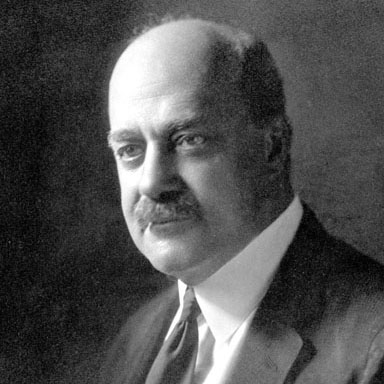
William B. Ittner

In 1897, a man named William B. Ittner became the Commissioner of School Buildings for the Board of Education in St. Louis.  It was a new position, created to oversee an ambitious plan to design and build scores of new public schools in St. Louis city. Before this, school buildings in St. Louis were vastly unappealing structures. Almost resembling prison blocks, school buildings were uniformly dark, dreary, and overcrowded. Simply put, attending public school in 19th century St. Louis was an uncomfortable and unhealthy experience.

Growing up in St. Louis, William Ittner attended city public schools. The experience of learning in a cold box-like building must have made a significant impact on him. After attending Washington University’s Manual Training School, he earned a degree in architecture from Cornell University. Upon returning to St. Louis, he began a successful career working in a few private architecture firms and on his own. When he landed his new job for the Board of Education in 1897, Ittner would apply his experience and knowledge to completely revolutionize school building design.

Ittner introduced what would eventually be called the “open plan”. His new school designs used natural lighting, open spaces, unique classroom designs, attractive exteriors, and improved safety features. Instead of a simple four-sided box, his schools implemented E-, U-, or H- shaped floor plans. Corridors were lined up along large windows, allowing sunlight to spill in and fill open spaces. His schools were the first in St. Louis to have indoor plumbing, heating, and adequate ventilation. Proper fire proofing became a priority for the first time.

School building exteriors became canvases for works of art. His father owned a brick factory, so he knew how to utilize different colors and textures of brick to create appealing designs. He incorporated towers, cupolas, and grand entrances that made schools look like civic monuments instead of plain brick boxes. Most importantly, his schools were designed to create a safe, healthy, and warm environment that fostered learning.

Walnut Park School

Ittner would design over fifty schools in St. Louis over the next eighteen years. At the same time, he built a national reputation. Architects, educators, and tourists from around the country traveled to St. Louis to see his designs in person. Thus, he began designing schools for other cities around the country. As a result, he is credited with the design of over 430 schools nationwide.

Today, forty-eight Ittner school buildings still stand in St. Louis city. Several more can be found in the county (including Maplewood High School and University City High School). His legacy is not limited to school buildings. He is the architect of three of the most notable buildings in St. Louis: The Continental Life Building, the Scottish Rite Cathedral, and the Missouri Athletic Club.

I decided to head out into St. Louis and find his schools. Over the course of a few days, I biked and drove all over St. Louis locating each one of them. The result was one of the most entertaining weekends I’ve had in some time.  It became something like a treasure hunt, sending me into neighborhoods and parts of the city I had never been.  I even met some friendly people who wondered what I was up to.  One particular gentleman walked me around and showed me some interesting features of the school he attended as a child.

I needed help, however. Since Ittner had such an influence on future school architects, many schools built after his tenure look almost identical to his.  To make sure I had the right schools, I went down to Landmarks Association of St. Louis to get some assistance.  The staff at Landmarks went above and beyond what I expected. Not only did they answer any question I threw at them, they let me review their entire survey of William B. Ittner schools. I thought forty-six schools existed, but Landmarks helped me determine two I had missed. After a quick ride to find them, I had pictures and notes for every Ittner school still standing.

Starting with his first school Eliot, and ending with his last school Mullanphy, here are the forty-eight schools still standing in St. Louis city. Each thumbnail is a link to a larger image and a bit more information about the school.

Several of the buildings remain open as functioning schools today (Blow, Clark, McKinley, Farragut, Mann, Sigel, Soldan, Sumner, etc.), while others are empty and for sale (Simmons, Lafayette, Marshall, Shepard). Many have been remodeled and are now apartments or condominiums (Field, Arlington, Emerson, Franklin, Harris Teacher’s College, Monroe), while others are being used for other purposes such as magnet schools or for special purposes (Shaw, Humboldt, Madison). Sadly, a few are in a severe state of disrepair (Rock Springs, Central/Yeatman High, Jackson). Carr School, located just north of downtown, is perennially on Landmarks Association’s list of the most endangered buildings in St. Louis. Just a few blocks away sits Henry School, which looks like it could have opened yesterday.

William B. Ittner Schools
It’s believed Ittner met an artist named Henry Chapman Mercer at the World’s Fair in 1904. Shortly after, beautiful mosaics designed by Mercer began being incorporated into the exterior walls of new Ittner schools. The mosaics at Carr are especially noteworthy. At Farragut Elementary in north city, a gentleman from the neighborhood walked me around and showed me a lion head fountain. It worked when he attended the school as a child, but it’s since been filled with cement.
Ittner School Features
Several of the schools are on the National Register of Historic Places (Carr, Clark, Eliot, Emerson, Field, Jackson, Mann, Rock Spring, Soldan, Sumner, Wyman, etc.). However, many consider Soldan High School on Union Boulevard to be the premier Ittner design. The school features towers, intricately carved stonework, fireplaces, a grand auditorium, and a beautifully tiled cafeteria. At the time of construction, even the lavatories and locker rooms in Soldan were being compared to fine hotels of the day.
Ittner School Features
Getting out to find the Ittner schools will take you to every corner of the city of St. Louis. Most can be identified by a cornerstone chiseled with the schools name, date of construction, and his name, Wm B. Ittner. Here’s a Google Earth map showing the location of each school.

St. Louis Ittner Schools

The Drink
Mosaic Lounge

Initially, I struggled with the drink aspect of this post. At first, I figured I’d just head to a bar or lounge near one of the schools. This idea didn’t seem quite right since a random bar has nothing to do with Ittner or a school it may sit near. Fortunately, the good folks at Landmarks helped me out again (albeit unknowingly).  While at their office, they informed me that the architecture firm that William B. Ittner founded after his job with the city of St. Louis still exists.  I left Landmarks and walked over to the building (it was located just a couple blocks away). To my great delight, the tapas bar Mosaic sits on the ground floor of the building that houses Ittner’s firm. After work, I headed over to Mosaic to see what kind of drink I could get.

I learned a few things at Mosaic. First, I learned that Mosaic makes a pretty good Manhattan. The recipe on their classic cocktail menu calls for Buffalo Trace Bourbon and Cinzano Sweet Vermouth. I ordered it straight-up, but I made no mention of my preference for shaken or stirred. I wasn’t happy with the presentation (they shook it and served it in a rocks glass), but I still liked the taste. Buffalo Trace was new to me, and I’ve always enjoyed Cinzano in my Manhattan.

Mosaic Manhattan

Second, I learned that I need to shut my trap about the topics I’m researching for this blog. The bartender saw me taking notes, so she asked what I was up to. I told her I was writing a post about William B. Ittner (she had never heard the name) and that I needed to find a drink that relates to him somehow.  When I explained that’s how I found myself at her bar, she rolled her eyes and looked at me like I was a complete nerd. She may be right, but I had a shitload of fun nerding out for this post.

This has easily the most enjoyable topic I’ve tackled in the young life of this blog. I enjoy exploring the parts of St. Louis I haven’t seen, and William Ittner took me to dozens of new places. A few of the areas were a bit rough around the edges (to say the least), but I love those parts of St. Louis. It’s why I write this blog. There are stories all over this town.

In conclusion, a few of the Ittner schools are worthy of their own post (Soldan, Sumner, Carr). I assume I’ll be retracing my steps and coming back to William B. Ittner in the future. Stay tuned.