
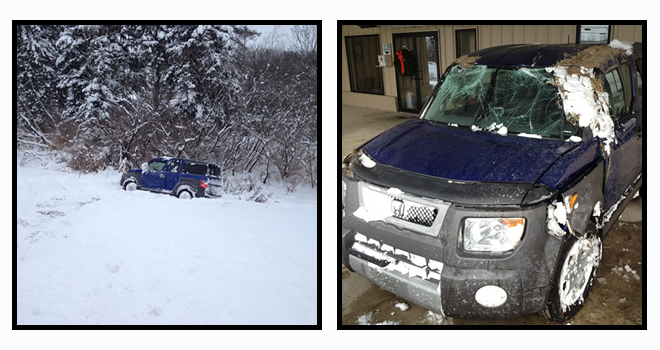
 I had a one hell of a day last week. While driving from my native upstate New York to my current home in St. Louis, my car hit an ice patch on I-86. I lost control, spun, and was flung off the highway. I was flipped perfectly onto the roof of the car, which is where I stayed as I bobsleighed one-hundred feet down a hill.
It was quite a ride. Lots of snow, glass, and colorful language was bouncing around inside the car as I went. Remarkably, I hit something that caused the car to slowly roll me back upright. I came to a stop, turned off the engine, and realized I was completely uninjured. I was able to walk away like nothing happened. Other than a slight headache from a book (I think it was a book) that hit me in the head during the roll, I was as good as new.
What does this mishap have to do with history and booze? Well, after being collected and driven back to my hometown of Elmira, I had some time on my hands. Instead of sitting around and feeling sorry for myself, I decided to dig up some history in the town where I spent the first eighteen years of my life.
For a small city, Elmira has some good stories to tell. With that in mind, please pardon this brief sojourn away from St. Louis. I’ll return to the hidden tales of The Gateway City soon enough.
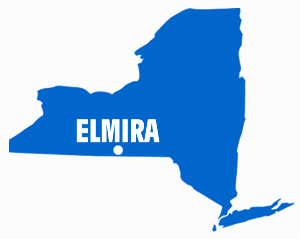
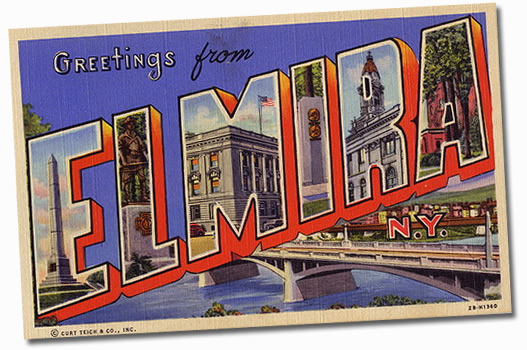
Elmira, New York is a small city of about 29,000 people in the Southern Tier of New York State. Just south of the Finger Lakes, it sits in a truly beautiful part of the state. Unlike St. Louis, it has rolling hills, voluminous lakes, and cooler summers. Although I now prefer to live in St. Louis, I’ll never waver from the opinion that it was a great place to grow up.
In fact, I believe Elmira shares many qualities with St. Louis, but on a far smaller scale. Both cities are the population centers of their respective areas. Both cities serve as the regional hub for financial, cultural, and educational institutions. Both cities have a rich and deep history that often gets overlooked by the people who live there.
On the flip side, both cities have watched their populations plummet in the years following World War II. Both cities are trying to bring people, companies, and jobs back within city limits. Both cities are desperate to revitalize their downtown cores (and both cities have mistakenly believed that building sports arenas is one way to do it).
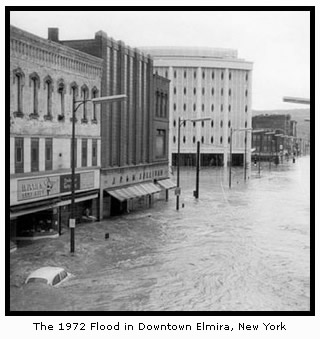
Both cities have also been severely impacted by flooding. While St. Louis’s history with flooding is well-known, Elmira’s history with rising waters is just as troubled. Many point to the damage caused by Hurricane Agnes in 1972 as the point from which downtown Elmira has never recovered.
And finally, both cities are filled with historic homes, buildings, and structures that are in desperate need of preservation.
Since starting this blog, I’ve become far more aware of the need for historical preservation. This was especially true when Landmarks Association helped me research the blog post about the William B. Ittner schools. I was stunned to see how much work and research they had completed in order to campaign for the survival of those historic buildings.
I can now say for certain that I wish my hometown had its own version of Landmarks seventy-five years ago. That’s because in 1939, the wrecking ball took apart this historically significant house that once sat at the corner of Church and Main streets in downtown Elmira.
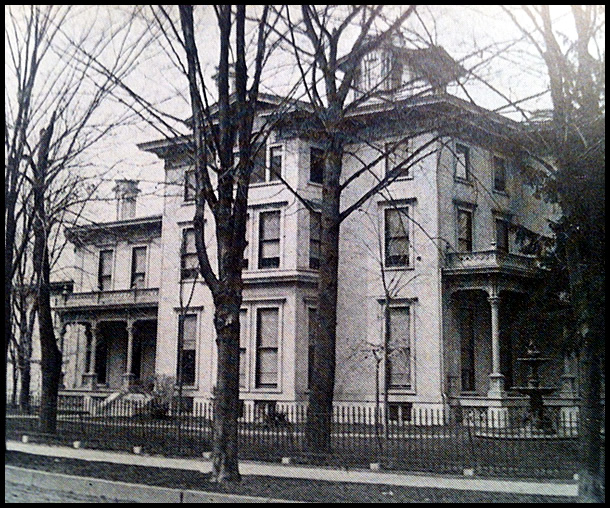
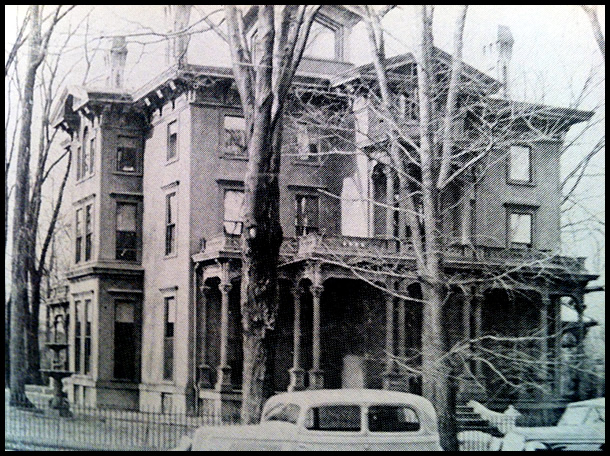
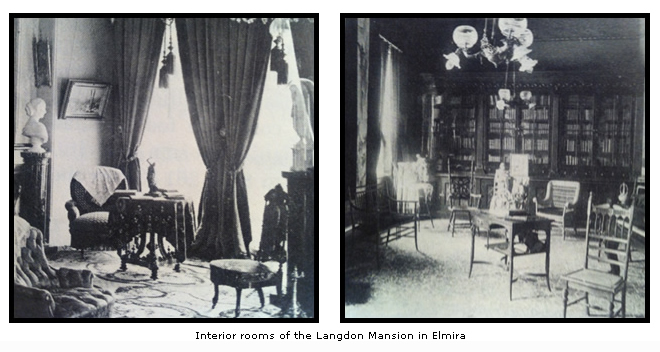
This large Victorian home was the home of a wealthy coal merchant named Jervis Langdon. He was an ardent abolitionist, and he served as a “conductor” on the Underground Railroad along with his close friend Thomas K. Beecher. The brother of Harriet Beecher Stowe, Thomas Beecher was the pastor of Park Church located across the street from Langdon’s home. Both men counted Frederick Douglass as a close friend. The famed abolitionist even once visited Langdon at his home in Elmira.
It was Langdon’s daughter, however, that would make the most significant impact upon the Langdon legacy in Elmira.
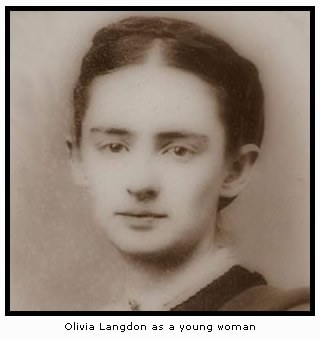
In 1867, Olivia’s brother Charles traveled to the Mediterranean aboard a boat named Quaker City. On the trip, he befriended a reporter writing a story for a California newspaper. That reporter was Samuel Langhorne Clemens, soon to become known as the famous author Mark Twain. One night, Charles showed Clemens a small daguerreotype of his sister Olivia. Upon looking at the portrait of the delicate woman, Clemens admitted to falling in “love at first sight”. Throughout the rest of the trip, he asked Charles to bring out the photograph and allow him to gaze upon it again. When the trip concluded, Twain made a point to visit Langdon and his sister during a trip to New York City. During that visit, Clemens was invited to visit the Langdon home in Elmira. It wasn’t long before Twain found himself knocking on the large door of the Langdon home on the corner Church and Main.
For the next two years, Clemens courted Olivia and visited Elmira often. After an initial rejection, the two became engaged in late 1869. On February 2, 1870, Mark Twain and Olivia Langdon were married by Thomas K. Beecher in the library of the Langdon home.
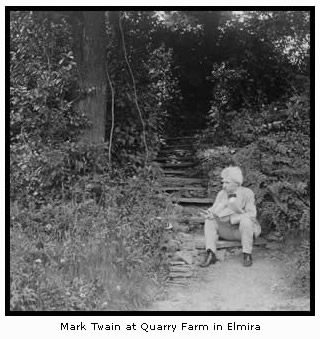
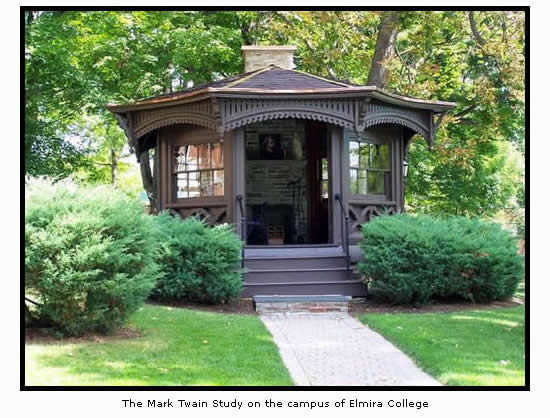
Over the next twenty years, the Clemens family would make Elmira their summer home. While there, they lived at Quarry Farm, a Langdon vacation home located on a large hill outside of town. In the octagonal study built there for him, Mark Twain found what he called “the quietest of all quiet places.” Here, he would write the majority of his most famous works, including Adventures of Tom Sawyer, The Adventures of Huckleberry Finn, The Prince and the Pauper, and A Connecticut Yankee in King Arthur’s Court.
While in Elmira, the Clemens family would spend a large amount of time at the large house in town. Three of the four Clemens children were born in the house. The house was a convenient place for Clemens to entertain visitors or to do business. The house is where Ulysses S. Grant once visited Twain to discuss his memoirs, a work that Twain helped get published. Clemens even stated that since the house was so large, one could “always escape your enemies in Langdon house”.
The Langdon home is also where on a warm day in 1889, a young reporter from British India traveled to Elmira in search of his idol. Detailing the experience in his later work Letters of Travel, Rudyard Kipling recounts his arrival in Elmira:
“I slid on the West Shore line, I slid until midnight, and they dumped me down at the door of a frozy hotel in Elmira. Yes, they knew all about “that man Clemens,” but reckoned he was not in town; had gone East somewhere.”
Kipling then took a carriage to Quarry Farm, but was told Clemens was in town. He traveled back down the hill and found himself at the Langdon house. Kipling continues with his description of the meeting:
“Then things happened somewhat in this order. A big, darkened drawing room; a huge chair; a man with eyes, a mane of grizzled hair, a brown mustache covering a mouth as delicate as a woman’s, a strong square hand shaking mine, and the slowest, calmest, levellest voice in all the world saying: – “Well, you think you owe me something, and you’ve come to tell me so. That’s what I call squaring a debt handsomely.”
“Piff!” from a cob-pipe (I always said that a Missouri meerschaum was the best smoking in the world), and behold! Mark Twain had curled himself up in the big armchair, and I was smoking reverently, as befits one in the presence of his superior.”
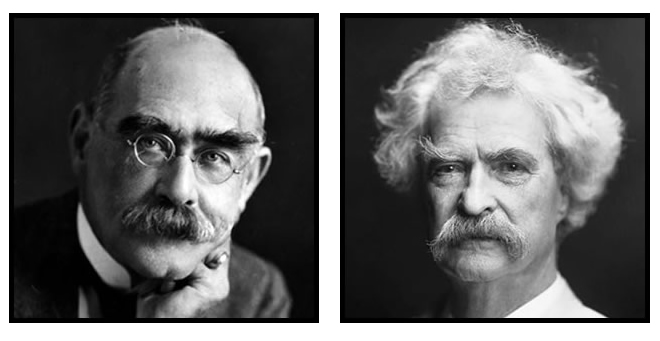
Kipling was just starting his career and was still unknown. It would be a few years before he’d achieve fame as the author of stories such as “Rikki-Tikki-Tavi” and “The Man Who Would Be King”. But a year after their meeting, Twain recognized a sketch of Kipling in a copy of the London World. The article also mentioned that Kipling had traveled to the United States. Twain took interest in Kipling’s work and began to admire his burgeoning career. In 1895, Twain wrote a letter to Kipling:
“It is reported that you are about to visit India. This has moved me to journey to that far country in order that I may unload from my conscience a debt long due to you. Years ago, you came from India to Elmira to visit me. It has always been my purpose to return that visit and that great compliment some day. I shall arrive next January, and you must be ready. I shall come riding my ayah with his tusks adorned with silver bells and ribbons, and escorted by a troop of native howdahs richly clad and mounted upon a herd of wild bungalows; and you must be on hand with a few bottles of glee, for I shall be thirsty.”
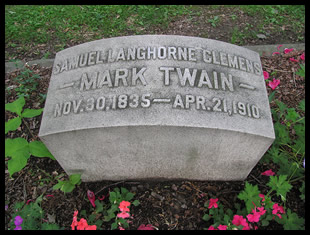
Olivia Langdon Clemens died in Italy in 1904. Although buried in Elmira, Clemens returned just once to Elmira after her passing. His last visit was in 1907 for the dedication of a new organ at Park Church. On that visit, he declined an offer to visit Quarry Farm because it would “awaken sorrowful thoughts”. Samuel Clemens died in 1910 and is buried in Woodlawn Cemetery in Elmira along with Olivia and their four children.
Imagine if the stately Langdon home still stood in Elmira. Located at the busiest downtown intersection, it could have become the symbol of the city. Flanked by the historically significant Park Church, the elegant Trinity Church, and Wisner Park, the entire neighborhood would have become one of the most historic corners in the Southern Tier. Perhaps the house could have been used as the focal point in presenting the legacy of Mark Twain in Elmira. Unlike other cities that claim a legacy to Twain (Hannibal, Hartford), Elmira has no central building from which to tell his story. The octagonal study that was relocated to the campus of Elmira College is too small. His grave in Woodlawn Cemetery is well, perhaps too morbid. Quarry Farm still stands, but it’s far outside of town and isn’t open to the public. It’s even likely that most Elmirans couldn’t find it if they tried.
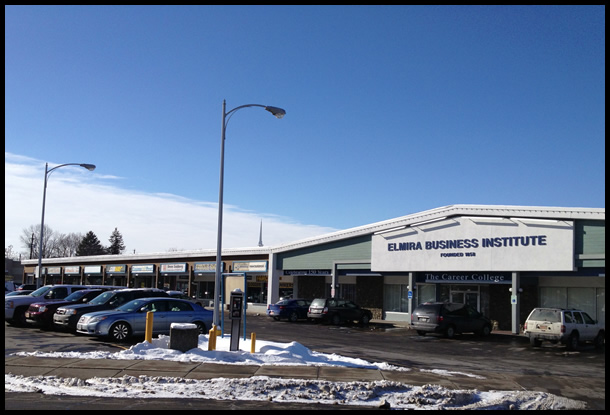
The ultimate fate of the Langdon home is nothing short of maddening. In the 1930’s, the Langdon family offered to sell the house to the city of Elmira at its assessed value. It was offered as such for the purpose of creating a museum or a place of historical significance. For a price of just under $50,000, the city could have preserved a rare historical jewel that would have been a beacon for the city. City leaders debated, voted, and ultimately concluded that such a large home would be too expensive to maintain. The city declined the offer, so the home was sold home to a private developer. Within months, the home was razed and a shopping center was built. Named “Langdon Plaza”, the shopping center provides visitors to Elmira a place to purchase meatball sandwiches and hair gel.
All that is left of the Langdon home is the fence that surrounded it. Like the octagonal study, it was relocated to the Elmira College campus.

After flipping a car, it’s so surprise that I needed a drink. Maybe five. And although completely uninjured, I still had the mind to milk it. To that end, Mom filled me with good bourbon, gin, and plenty of home cooked food over the next few days.
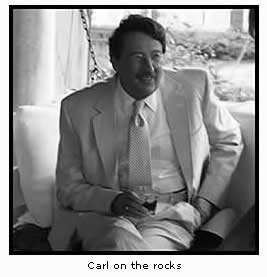
The extended trip also allowed me to spend New Years Eve with my Mother and her close friends. The party was held at the home of two very close friends in Elmira, Carl and Bunny Vallely. This presented a great opportunity because Carl Vallely is also a huge fan of the Manhattan cocktail.
There’s a great story that goes along with Carl and his love of the Manhattan. Years ago, when he first courted Bunny, he showed up at her door to take her on their first date. Tucked under his arm was a thermos. When Bunny answered the door and inquired “What’s in the thermos?”, to which Carl replied “Manhattans, of course!”. I can’t help but admire the guy for that. Taking a thermos of Manhattans on a first date is nothing short of fantastic.
And going forward in my search Manhattan cocktail varieties, I can now the recipe for “The Vallely Manhattan”:
- 1 Part Canadian Club Whisky
- 1 Part Sweet Vermouth
- Stirred and served on the rocks
I asked Carl what the ratio of the ingredients should be, and he simply said “until you get the right color”. I guess I’ll have to work on that. He also omits the cherry, since it “takes up room in the glass needed for more Manhattan”. I certainly can’t argue with that logic. The “on the rocks” aspect of the Vallely is tough for me to get by, but it’s his drink. I was in his house and I was happy to drink them with a fellow fan of my favorite cocktail.
Carl served me a few of his Manhattans that night, but I also took the time to visit Horigan’s in Elmira. Owned by my old high school pal Katie Boland, I am a frequent visitor here when I’m in Elmira. My father used to spend so much time at the bar reading books that they’d actually keep the book there for him. Katie also happens to be Carl’s step-daughter, so when I asked for Carl’s version of the Manhattan, she was happy to oblige.
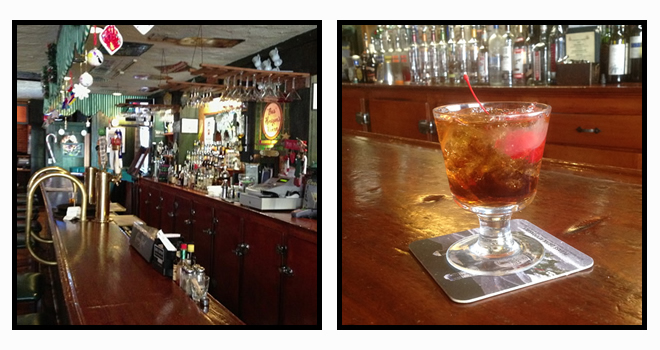 As for my opinion of the drink, I’ll say that it’s very pleasant. Due to the ice and the use of Canadian whisky, it’s a lighter and smoother version what I’m used to. It doesn’t have that bite on the first sip (which I adore). It made me think I could be tricked into drinking more in one sitting than I’m used to. After rolling a car, that’s not the worst idea.
So sorry about your adventure bobsledding, but how fortunate for the rest of us that we learned more about your Elmira and my beloved Mr. Clemens. Thanks for using your recovery time to share those stories and pictures. I’m thinking of drawing up plans for the Barbara Forst Study.
I’m so glad you enjoyed it. Thanks for reading!
Your article kicked butt! My brother sent it to me. He’s in Albuquerque, I’m on my way to Seattle…again. But (former) home is where the heart is…we’re from Waverly, and I went to Elmira College back when. I remember shopping at Tommy Hilfiger’s business in a house in Elmira. Used to buy my bell-bottom jeans from Tommy. Still groovy after all these years. I’ll be reading more of your posts, Cameron. You’re a fun writer.
Great read! I, too, was born and raised in Elmira, and have memories over the years of many beautiful, historical places being torn down, only to erect fugly buildings that, to this day, are dead or struggling. I personally feel that if Elmira still had these many wonderful places with the great history behind them, whether they be museums, antique shops, boutiques, restaurants or cafes, etc, that perhaps the city would attract More visitors! My family and I drive all over the US to visit cool historic cities & towns that have preserved their architectural beauty. I mean….was it Really worth tearing down the gorgeous Langdon house, with its rich history, to erect that sight-for-sore eyes plaza that has NO personality?? I feel your pain, man….and if it weren’t for my family who remained here that I longed to return to, after living away from the area for many years, I would not have returned to this area, as there are so many wonderfully awesome adorable historical towns and cities that are so much more appealing to live in! Shame on those whose decision it was to flatten the beauty that once contributed to the attractiveness of Elmira!
Enjoyed you postings on the Langdon mansion, ran across it while researching my thesis on Twain and anti-imperialism.
Thank you for the wonderful overview of the Clemens/Langdon legacy. My grandfather, Tony Rossi, went to the demolition site and purchased about 80 feet of fence that surrounded the Langdon home. To this day it is wrapped around the ground floor of the home he built on a hill overlooking Elmira. His daughter now lives in that house.
I spend every New Year in Elmira at my Dad’s house that I grew up in. It was a great town to grow up in but not so much now.
Thanks for reading. I’ve heard the names “Cesari” and “Rossi” often in Elmira. You may know my parents, Peter and Susan Collins (Elmira is a small town, after all). That’s so interesting about the fence. I’m glad to hear it’s been put to good use. Glad you enjoyed the post!
Cam – very glad to hear you’re all right. Nice post as always. And, to tie together the “degrees of separation” from the previous post, Tony Rossi had three daughters whose married names were: Lucy (Cesari), Mary (Navone) and Bernadette (Romeo). So yes, Josh’s grandfather and Bernadette’s father. The house referred to is the one above Upland Drive where the Romeo’s currently live. — chip
Fantastic post! There are parts of the interior of the Langdon house all over the area; stair case here, floorboards there. The story has always been illustrative of Elmira’s view of itself and history — if it gets a little rough, let’s tear it down or let it fall into disrepair so nobody can do anything about it. Thank goodness for Elmira College preserving the Study, the fence, and the Farm. My favorite detail from the Langdon House saga is that the newspaper conducted a public survey to gauge interest in preserving the mansion and more people voted about Daylight Savings time than historic preservation. So sad. Great to highlight the local treasure of Horigan’s too! So sorry about your car.
I almost included the story about the daylight savings vote, but the blog post was running a bit long to begin with. Thanks so much for reading. Glad you enjoyed it.
i am always so pleased to see old photos of twain and kipling, but it was carl on the rocks that truly made my day. thanks!
Could this be my Cameron of French Club light bulb sale fame? What a wonderful visit this was to the town where I spent 35 years. My three kids would agree with you that it was indeed a wonderful place to grow up.
Bonjour Mme. Faber! What a wonderful surprise. The light bulb sale! I believe we at least broke even, didn’t we? I still say it’s a better product than the gummy bears the other clubs were always peddling. I assume you also no longer call Elmira home? I’ve often wondered where my favorite teachers had scattered to. Sadly, my French is weak these days. I went to Provence a few years ago and I didn’t communicate very well. How nice to hear from you. I hope you are well!
The light bulbs were a stroke of genius. Absolutely no product spoilage…and now they’re collector’s items. Ted and I have been retired for over twelve years and are enjoying life in Asheville, NC. It’s lovingly known as the Paris of the South, although the City of Light it’s not. It is, however, quite charming and we travel a lot, so life is busy. How did you get to St. Louis. Our son, Ted, went to Wash U. Do I remember that you were headed there, too?
It was nice reading Cameron’s blog, but the best part was seeing coach Faber’s wife leaving a reply! Mrs. Faber tell coach and the boys I said hello. Email me coaches number would love to speak with him. Krwill22@gmail.com
As a fellow transfer from Elmira to St. Louis and a member of The Park Church, I highly enjoyed your blog! Though I did not grow up in Elmira, in the short time I lived there it was hard not to get caught up in the history! What a wonderful article, especially the information about Grant and Kipling. It was new information to me! The Grant museum promotes Twain helping, maybe they should be taught and promote that it happened in Elmira, NY!
Hi. My mom (Mme. Faber) sent me over this way, and I’m glad she did. Excellent article, and I’ll be catching up on the St. Louis stuff as well.
Hope your trip back to STL is less eventful.
(And not to be a dick, but there’s a typo in the “Samuel Langhorne Clements” tag.)
Cool Cameron – just found your blog via the Riverfront Times. Sorry to hear about your accident, but glad you’re OK. Enjoyed reading about your hometown and St. Louis history. I always planned to get to the Cambell House on my lunch hour, but never did. Now I’ll make a point to go some weekend. Hope you are well!
Chris K previously from CPI marketing:)
Hey Chris, nice to hear from you. Glad you enjoyed the blog. Let me know if you ever plan to go over to CHM so I can give you the tour (also, it’s open by appointment only until March 1). Take care!
This was a very interesting post on the Langdon Mansion. Thank you for educating us on this bit of Elmira history. It is unfortunate that preservation was not important, and to tear down the mantion and build a shopping plaza was insane. I have not lived in Elmira in 49 years. We don’t visit often and it is depressing to see how the city has deteriorated over the years. It is a beautiful area, and was a good place to grow up.
Hope you have recovered from your unfortunate accident.
Cam – this is wonderful. Except for the part about tearing down the Langdon house- which, in itself, is a testament to the pervasive shortsightedness of City Council. Read the history of Eldridge Park for example – the park and all the Italian statuary and ponds were left as a gift but rejected by the council – only to have the city decide about 3 decades later to buy the park back as pretty much a barren piece of land having been stripped of the statuary and gardens in disarray – sigh
Maybe we could all persuade Tommy Hilfiger to buy Langdon Plaza, tear it down and build an exact replica of the Langdon home??? Elmira WAS a beautiful city…sighhhhhh 🙁
That’s an amazing idea!
I miss Elmira and Elmira Hgts , as you say it was wonderful growing up there in its glory days.Sad to see it now just a shame.
I love your article on the Langdon house. I have done a bit of research on it my self along with some family history. Very well done. I remember shopping at Tommy’s shop on Water street many moons ago, the good old days. Thanks for the memories.
Nice story…..and an Interesting coincidence….. I had just parked my blue Honda Element in the Weis parking lot this past year, and struck up a conversation with a woman I am guessing is your mother. She commented on her son’s identical Element, which had been in an accident! She said that it was lucky that you hadn’t been hurt too badly, and the vehicle had protected you, and that they both were about the same year’s model. I was glad to hear this happy ending! What an interesting and lovely lady your mother is! It’s nice to have these spontaneous interactions with strangers in today’s world!
Your comment made my day. You most definitely encountered my lovely (and nutty) mother. Not only does she shop at Weis often, but she routinely engages strangers in conversation. What a small world. It makes me wish I was back in Elmira visiting her. Thanks for reading!
That was such an amazing post… Love learning about the history of my home town.. Thank you for sharing..
Thanks so much for your nice comment. Hearing stuff like that makes the work worth it 🙂
Very interesting informative piece. Sad but true that Elmira is in fact deteriorated. I would dare say that the local prisons have drawn in many. I have always loves the tales of Samuel Clements. Only wish I could have been around to see the mansion. Thank you for sharing, and glad your ok! 🙂
Interesting history. My great uncle, Daniel Hungerford (developer of the rocket car) thought that the Langdon mansion should be saved. He wrote articles to the newspapers about its historical value. His rocket powered car is now at the His rocket powered car is at the NYS museum in Albany, NY
It is truly unfortunate that the Langdon home was demolished but you can’t blame the city fathers. The Star-Gazette did an informal poll and the readers overwhelmingly turned it down. It was the height of the depression and the last thing residents wanted was another building off the tax rolls and being funded by local government. History and tourism had to take a back seat to putting food on the table.
Love your work. This is my second re-read. I know your Dad is proud. I used to spend much time at Horrigan’s, and often he was reading one of those books when I walked in. I sure miss that.
I was born and raised here in elmira. The Langdon mansion was something I always wanted to see but instead my bank sits there. I’ve never found quarry farm, I plan on looking this spring though. This article was great, thanks for shining some light on our once great city.
I was born and raised in Elmira. I love what the city was,but not now.thanks for astory of the good history.loved it.
My husband and I were both raised in Elmira. My family and I were members of Trinity Episcopal Church across from Langdon Plaza and I have often wished that the mansion was still there for our historical appreciation. My Mom and Dad used to take me to Quarry Farm as a child and we would walk up the little hill to the study. It was sad but moving it to the Elmira College Campus was necessary to protect it from vandalism. I have visited it a few times while on the trolley tour with Mark Delgrosso. It is now sad to drive the streets of Elmira while memories of walking the same streets in the 50’s come to the surface. It was such a busy and lovely shopping area at that time with beautiful stores, always full of customers. Linda and John Burke
Greetings, Elmira native and current resident of Ithaca here. It’s terribly sad that most of Elmira’s citizens are completely oblivious to the once gilded culture Elmira had… this deeply upsets me. Thank you for the pleasurable read.
I was born in Elmira and raised in Horseheads and now split my time between Sullivanville and St. Croix in the Virgin Islands. .For several years Iworked with the Near Westside NA. The Langdons offered the Manson to the city @ assessed value and at that time Elmira was like Detroit bankrupt ! The house on that site was not built the entire block with by the Langdons but greatly enlarged by them to encompass with built the entire block environment barns greenhouse etc. The Landons also owned several other homes in the Near Westside neighborhood that still remain. This is a great article and helps put perspective on historic resources.
Great article. I too grew up in Elmira in the early ’50s and graduated from EFA in 1961. Elmira was truly a bustling metropolis back then with over 50,000 people. Sadly, Elmira has become like a ghost town. I usually visit every summer, it’s great to see old friends but sad to see what Elmira has become. By the way, try that Manhattan with Crown Royal and sweet vermouth, no cherry, you’ll be pleasantly surprised.
Thank you for such a wonderful history lesson. I first arrived here in 1987on a mission for The Church of Jesus Christ of Latter-day Saints. Coming from Las Vegas, I had never seen buildings like in Elmira. I was fascinated by the Churches, specifically the ones there on Church and Main, and the one just down Main by Elmira Collage. I remember thinking how odd it was that downtown was so beautiful then there was this strip mall called Langdon Plaza. I miss Panosians that was in that plaza, but miss Izards and their tea room more. I do not live in Elmira but have a business just down from Church and Main. My home is in Horseheads, which as you know has a rich history too. Not as many beautiful old homes as Elmira, but still beautiful non the less. I’m glad your ok, sorry about your car.
Nice article. I’ve lived near Elmira all my life and frankly never bothered to learn much about the history that I walk by every day. Next time I pass the corner of Church and Main, I’ll be able to appreciate it a little more.
January 31,2014
Bernard and Carol (Naylor) Kline
So sorry to hear about your accident and so glad that the Manhattans helped you. My mom made the best ones but she would not think of drinking one by herself. I was born in Elmira and so was my mother. Bernie and I both graduated from Elmira Free Academy (now Ernie Davis Middle School) class of 1959. Linda your article was so great and I really enjoyed it. I remember Elmira it in the 1950’s and all the great stores downtown,the 5 movie theaters,being able to walk everywhere,Eldridge Park,hiking with my mom and a group of Boy Scouts up the east hill,climbing the stone quarry just to see the old Langdon Farm with the Mark Twain had his study and of course the Popcorn Truck. We are both looking forward to going to the 1959 class reunion and seeing you. It is great that a group of you have kept up the tradition. We have lived in Hudson, Florida for 3 years and have many relatives in the Elmira area. We love to travel but my heart will always be in Elmira and those great Finger Lakes especially Seneca Lake.
I stumbled upon this post searching on the internet for the year the Langdon Mansion was built, (still haven’t uncovered the date) and I thoroughly enjoyed the detailed research here as well as your engaging writing voice. A pleasure to read. Hoping you and your car have a better year–less snow–next year. I’m one of the few locals who adore Elmira’s history, and agree with you how the buildings counted as trash by past generations might have been our tourism treasure.
I worked with a Suzie Collins on the 2000 Census here in Elmira–I imagine it was your mother, since you describe a warm, kind lady with a sharp wit and a heartwarming smile. She and the Census workers at One Komer Center threw me a baby shower that year for my Millennium baby, delivered on St Patty’s Day–not bad for an Irish gal. But Suzie was the best boss I’ve ever had the pleasure to work for.
I hope that Elmira’s more recent attempts to preserve what is left of its historical roots continues. In May, a living history event will take place on the river at the site of the old Civil War prison camp, which marks its 150th anniversary along with Elmira’s becoming a city in 1864. It may not be as glamorous as Mark Twain and the underground railroad history, but it is an important chapter here nonetheless.
If you happened upon the date of the Langdon Mansion’s completion in your research, I would be delighted to know.
Cheers
Being that my roots were in Elmira, it was an awesome story and always love to read the history, I do remember in 6th or 7th grade we did a field trip to what I believe if I remember right was Langdons great granddaughters house right outside of Elmira!! Such great history!!
What a great idea JH Luther!!
Sadly, we left Elmira when I was young (11), but love every memory I have as a child. It really was the perfect place to be young. Stories like these make me long to live there again. Thank you for sharing and for giving us a little history lesson! :o)
Although I was born in Chicago in 1929, my family moved to Elmira in 1936. The Langdon home was still standing And I was thrilled to learn that Mark Twain had married Olivia Langdon and spent summers at the Quarry Farm. There were still street cars going up & down water St & Maple Avenue near my home I grew up from age 7 until I enlisted in the US Air Force at age 23 during the Korean Crisis. I graduated from Southside High School in 1947. Besides the hurricane that demolished most of Elmira, there was a flood in the Spring of 1946 which caused my Junior prom at SHS to be postponed. My parents are buried in Woodlawn Cemetery & when I go to visit their graves I always stop at the Mark Twain monument and ad mire the fact he chose to have him, his wife & all of his children buried there also.there. I have lived in Albany, NY for the past 38 years but still make frequent trips to Elmira. I am sad when I see what has happened to “my kind of Town” From a bustling city of the 50″s and a population of around 50,000, five movie theaters to a small city that has deteriorated neighborhoods and lost most of its charm. But I still have pleasant memories that I will continue to visit Elmira when I get a chance.
9 windows from the Langdon home are in our front porch.
Langdon Plaza was the home of the A+P. The Mark Twain Hotel is also a source of great memories from the ’50’s.
I spent my childhood and early teen years in Horseheads, and have lived in Elmira for the last 31 years. I am fascinated by the history that surrounds this area (Horseheads is rich with it as well, as I’m sure you are already aware) and I love learning more. Thank you so much for this story.
I appreciate the article on the sadly long-gone mansion. It’s rather heartbreaking to read of the short-sighted act of demolition. I’m in the midst of researching family from Elmira (Birminghams and Richardsons) and my aunt was nurse-maid for a couple of years to Twain’s daughter Suzy. The Birmingham family lived on the other side of East Hill from the Langdons, according to family records. My great-great uncle, as a child, had reportedly delivered telegrams to Twain at his study and been invited to a lecture. Now, those of us in the family can return to savor the period-accurate meatball subs and hair gel, eh?
I was born at St Joe’s in ’43 and grew up in nearby PA in a little village called Snedekerville. My father always said that Elmira was a war town
– meaning it prospered during wartime and not so much during peace. But, that is just part of it. All the industry before and after WWII gradually
left for whatever reasons and was replaced by America’s favorite industry – prisons. Elmira got suckered into the same situation as many other
small and medium sized cities in the U.S. – our country’s penchant for warehousing human beings during the War on Drugs. By the time Agnes
plowed thru in 1972 downtown was to weak to recover. My Aunt Louise White was the executive secretary at the Gorton Coy from the late
1940’s until Agnes hit. After working for the SBA in other parts of the country for a few years she got a job back in Elmira:
At the Elmira Reception Center. Anyway, this is the first time I have read Cameron’s writings and I want to thank him and the people
commenting for bringing back some good memories for a guy held hostage here in Florida.
Are you related to Alice White (Towner)?
Your blog is entertaining and informative. Glad you made out ok with the car situation and then wrote this.
I retired from USPS in Elmira NY, transplanted from the Phila PA area. Since I enjoy learning about our past, I was happy to learn local history about that rascal, Mark Twain. Imagine my surprise when I found pictures taken by my Great-Uncle, Edward O. Bagley. He spent time in our city in 1942, as a still photographer (uncredited) for a movie about Mark Twain.
Sad news…Horrigan’s is closed.
Thanks, again. I’ll be reading more of your work.
I recently stumbled across your blog because I was looking for a picture of the old Langdon house. As I read further I realized that we have common friends. My husband graduated from high school in Corning with Bunny (and Pat Boland) in 1968. When our kids were young we lived in Elmira and Bunny and I were co-leaders for Sara and our youngest’s girl scout troop. We still send the Vallelys a Christmas card. If I knew about Carl’s Manhattan obsession, I had forgotten. I’m glad that you survived your harrowing drive home.
I loved this piece. I am an amateur writer who has been working on a novel set in Elmira in the late 1850’s. When I started out I knew little about the place other than it is where Mark Twain wrote his masterpieces. As I have learned about the city during that time period, I have become increasingly fascinated with its story and the people who inhabited the place. If I was to make a suggestion to Elmira, I’d say time to say goodbye to the site of meatball sandwiches and hair gel. Build a replica of the house in that location. Use old materials and methods where possible. I’d guess that even in a reproduction, the ghosts of Twain, Livy, Jervis, US Grant etc. will be happy to tell their stories. And I would be happy to visit them there.